

Tooele, UT · What we treat
Foot and ankle pain in Tooele.
A foot that hurts most in the first few steps rarely has one clean explanation: a cause-first evaluation finds out why, then a plan with an endpoint gets you back to walking, standing, and lacing up without bracing for it first.
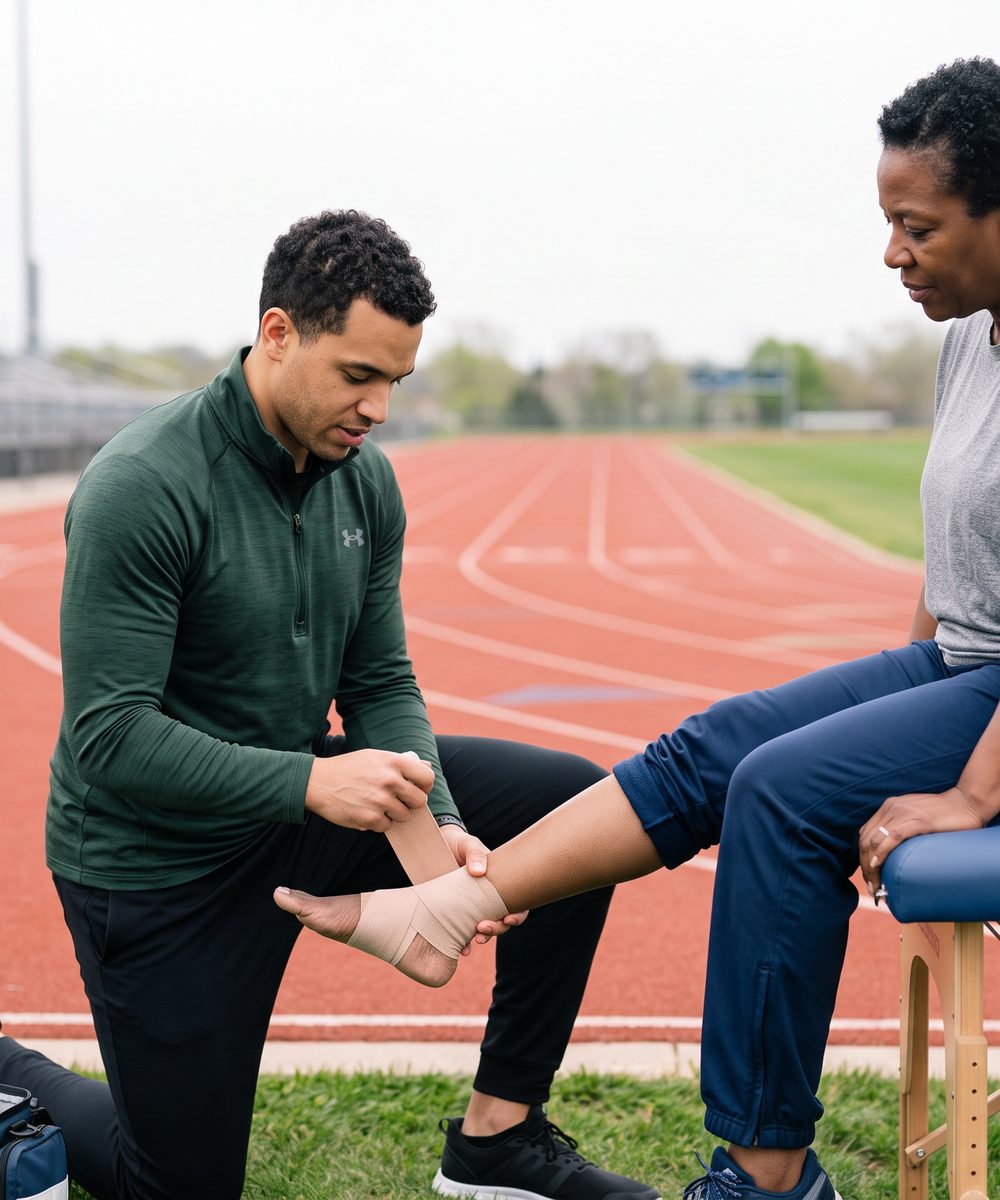
Sound familiar?
Nobody walks in describing plantar fasciitis. They describe mornings like these. Tap one that sounds like your week.
-
UsuallyPlantar fasciitis or deconditioning: tissue irritated by the first steps, or foot muscles quietly losing capacity.
Why does this happen ⟶ -
UsuallyPlantar fasciitis or Achilles irritation: tissue that eases as things warm up but keeps returning at the same trigger.
Why does this happen ⟶ -
UsuallyMechanics and load: how your foot strikes and rolls, often shifted by new footwear or more time on your feet than you’re conditioned for.
Why does this happen ⟶
- “Walking barefoot across the kitchen used to be nothing. Now it’s a decision.”
- “I roll it on ice most nights, just so morning is a little less rough.”
- “The dog walk that used to clear my head now ends with me limping the last block.”
If two or three of those sound like your week, you’re not describing a mystery. You’re describing a pattern we see often, and one an evaluation is built to explain.
Why does foot and ankle pain happen?
There’s rarely one single cause, which is exactly why guessing doesn’t work. What we usually find, alone or in combination:
- Plantar fasciitis. The band of tissue along the bottom of the foot, irritated enough to make the first steps out of bed or off the couch the worst part of the day.
- Achilles tendinitis. The tendon at the back of the heel, often overloaded by a sudden jump in walking, running, or standing on your feet all day.
- An old sprain that never fully settled. Ligaments around the ankle that healed loose or weak, often leaving the joint feeling unstable or quick to roll again.
- Mechanics and load. How your foot strikes and rolls, often shifted by new footwear or simply more time on your feet than your foot is conditioned for.
- Deconditioning. Calf and foot muscles that have quietly lost capacity, often after months of less walking than usual.
None of these are diagnoses you make yourself, and most don’t require imaging to start treating. That’s what the evaluation sorts out.
How do we treat foot and ankle pain in Tooele?
Treatment starts with a cause-first evaluation: testing how your foot, ankle, and calf move and load together, not just pressing on the spot that hurts, because where it hurts isn’t always why it hurts. From there, care moves through four named phases.
The plan’s endpoint is named at your evaluation, reviewed with you every phase, because the goal is to get you back to your week, not to keep you on the schedule.
Calm it down.
Hands-on manual therapy and positions that unload the irritated tissue, starting the first visit. Most patients notice a meaningful difference within the first few sessions.
Restore what’s stuck.
Mobility work for the ankle and calf actually restricting you, dosed to what the foot can tolerate that week, not a printed sheet.
Build strength you trust.
Progressive calf, foot, and ankle strength against standards you clear before moving on, so standing, walking, and running become load-tolerant again, not just pain-free.
Make it stay fixed.
Testing before you’re cleared, then a home program sized to your week, plus coaching on the footwear and surfaces that tend to reload the same spot.
What does getting better look like?
People who end up booking an evaluation for foot or ankle pain are rarely the ones who rolled it once and stopped. More often, it’s a slower story: months of buying new insoles, avoiding the long walk, deciding the limp in the first few steps is just how mornings go now.
Most patients notice a difference within the first two or three visits, since hands-on treatment starts at the evaluation itself. From there, progress tends to show up in ordinary places first: standing at the sink without shifting your weight, walking barefoot across the kitchen without thinking about it, finishing the dog walk without the limp at the end.
Left untreated, the cause behind foot and ankle pain rarely stays quiet; it tends to change how you stand, walk, and lace up, and each flare tends to run a little longer than the last.
An evaluation turns that guesswork into a plan with a specific estimate, reviewed with you at every phase.
Which services treat foot and ankle pain?
Physical Therapy
Is the foundation of treatment: the cause-first evaluation and the four-phase plan that runs the whole recovery.
02Shockwave Therapy
A tool for Achilles and plantar fascia pain that keeps flaring back up once training resumes.
03Dry Needling
Targets the calf or foot guarding that builds up around an irritated Achilles or plantar fascia when it isn’t releasing with manual therapy alone.
04ASTYM
Treats the degenerative Achilles or plantar tissue that a stretching program alone hasn’t resolved.
“The first ten steps every morning were brutal for almost a year before I called. They found it was my Achilles, not just my heel, and gave me an actual plan instead of another stretch handout.”Priya L. · Google review (demo quote, pending client swap)
Questions, answered plainly.
The things people ask on the phone about their foot and ankle, written down.
Most foot and ankle pain isn’t a medical emergency, but “serious” isn’t something to guess at from home. Sometimes the pain fades while the cause stays, which is why it tends to return every time you stand for a long shift, walk further than usual, or wear the wrong shoe, often lasting a little longer each round. An evaluation tells you what you’re actually dealing with, and if anything looks like it needs a physician first, we’ll say so and point you there directly.
In plain terms: plantar fasciitis usually involves irritation along the bottom of the foot, Achilles tendinitis is an overloaded tendon at the back of the heel, and an old sprain is a joint that healed loose or unstable. They can overlap, which is why the evaluation tests movement and strength instead of guessing from one symptom.
Usually, yes, with modifications your doctor gives you at the evaluation. Certain surfaces, distances, or footwear get adjusted for a phase, then reintroduced once you’ve cleared the standard for that phase, not a blanket “rest” instruction.
Avoid pushing through a sharp pain with every step, sudden jumps in walking or running distance, and unsupportive footwear on hard surfaces for long stretches. Beyond that, most people do better learning which movements are safe than by sitting still and waiting. Your evaluation will tell you exactly what to modify and for how long.
Start with a cause-first evaluation for your foot or ankle.
Put it in writing.
Five short questions. A real person calls you back, usually within two business hours, with times that fit your week.
The people who end up filling this out are rarely in the worst pain of their life. They’re just done working around it, done picking the errand that doesn’t require the stairs. If that’s the stage you’re at, this is the part where you stop researching and start.
Consider it filed.
A real person will call you back, usually within two business hours, with appointment times that fit your week. Keep your phone nearby.
Can’t wait? Call (801) 508-4784 ⟶Two clinics in Tooele. Both easy to park.
Two locations in town, both with parking by the door. Same team, same one-on-one care. Come see either one before you commit, if you like.
Two clinics · Reach Physical Therapy and Performance
Lodestone Way ⟶West 60 South ⟶Directions open in Google Maps