

Tooele, UT · Services
Barbell movement analysis in Tooele.
A phase-by-phase breakdown of your deadlift, clean & jerk, snatch, or power clean, built by a Doctor of Physical Therapy who trains lifters, not a quick form check between sets.
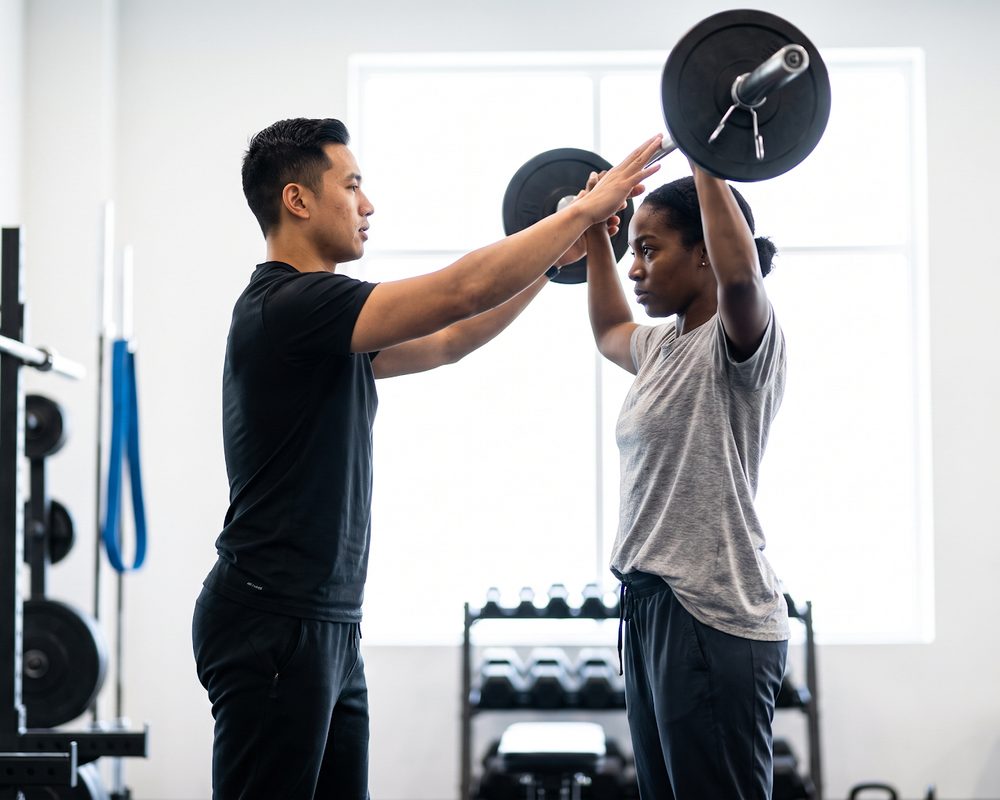
Barbell movement analysis breaks your lift down to identify exactly where you’re losing efficiency, power, or control. It isn’t “form advice” called out between sets. It’s a structured, phase-by-phase analysis with clear, actionable corrections you can apply immediately.
Each lift is broken into key phases so we can isolate exactly where problems occur:
First Pull (Floor → Knee)
We assess:
- Bar path off the floor
- Spine position and bracing strategy
- Knee and hip sequencing
- Weight distribution (midfoot vs. toes/heels)
Common issues we identify: hips shooting up early, bar drifting away from the body, loss of tension off the floor.
Second Pull (Knee → Hip Extension)
We assess:
- Timing of hip extension
- Power transfer through the hips
- Bar proximity to the body
- Coordination between upper and lower body
Common issues: early arm pull, incomplete hip extension, bar looping away from the body.
Third Pull (Pull Under / Catch Phase)
We assess:
- Speed under the bar
- Receiving position (depth, stability, alignment)
- Shoulder and thoracic positioning
- Footwork and timing
Common issues: slow turnover under the bar, poor catch stability, inconsistent receiving position.
When a mobility or stability limitation is driving the fault, your Doctor of Physical Therapy will say so at that visit, and it can fold into a full evaluation and plan. When the fix is purely technical, the video breakdown and corrections may be all you need.
Which lifts do we analyze?
The same three-phase breakdown, applied to the lifts that actually get trained around here:
Deadlift ⟶
Setup, tension, and bar path efficiency off the floor.
02Clean & Jerk ⟶
Pull mechanics, front rack position, and overhead stability.
03Snatch ⟶
Full movement efficiency, bar speed, and overhead control.
04Power Clean ⟶
Explosiveness through the pull and receiving mechanics in the catch.
Common faults show up in predictable places: hips shooting up early off the floor, an early arm pull that steals power from the hips, a slow turnover that turns a made lift into a missed one. Naming which one is yours is the point of the analysis.
What do you get from a barbell analysis?
You bring the lift you want broken down. We record it, then walk through it phase by phase: the first pull off the floor, the second pull through hip extension, and the third pull as you get under the bar, naming the specific issue in each one rather than a general note on your form.
What you get:
- Video breakdown of your lift
- Phase-by-phase analysis (first, second, third pull)
- Clear corrections you can apply immediately
- Mobility or stability limitations identified
- Optional follow-up programming or treatment recommendations

Who this is for.
Barbell analysis fits CrossFit athletes, Olympic lifters, and powerlifters, along with anyone who wants to move more efficiently and lift without pain. You don’t need to be chasing a competition total to benefit from seeing exactly where your lift breaks down.
If you’ve plateaued on a lift, keep missing it in the same spot, or have a nagging ache that shows up only under a bar, this is usually the faster way to find out why, instead of guessing your way through another training cycle.
Physical Therapy ⟶
If the fault traces back to an injury or a mobility limitation, this is where it gets rebuilt.
02ASTYM ⟶
When restricted tissue, not weakness, is the reason a joint won’t hit the position the lift needs.
A technical fix and a strength fix are two different jobs. This finds out which one you need.
“I’d missed the same clean at the same weight for three months. Turned out the miss started in my first pull, not the catch, which nobody had pointed out before.”Demo quote, pending client swap
Questions, answered plainly.
The deadlift, clean and jerk, snatch, and power clean. Each lift is broken into its key phases, the first pull off the floor, the second pull through hip extension, and the third pull under the bar, so we can isolate exactly where efficiency, power, or control is being lost.
No. It’s a structured, phase-by-phase breakdown of your lift with a video review and clear, actionable corrections for each phase, not a quick verbal note on your form. Mobility or stability limitations get identified along the way, with optional follow-up programming or treatment if the evaluation points there.
CrossFit athletes, Olympic lifters, and powerlifters, along with anyone who wants to move more efficiently and lift without pain. You don’t need to be chasing a competition total to benefit from a phase-by-phase look at where your lift is breaking down.
If the analysis turns up a mobility or stability limitation behind the technical fault, your Doctor of Physical Therapy will tell you at that visit and can fold it into a full evaluation and plan. If the fix is purely technical, the video breakdown and corrections may be all you need.
Find out which phase is actually costing you the lift.
Put it in writing.
Five short questions. A real person calls you back, usually within two business hours, with times that fit your week.
The people who end up filling this out are rarely in the worst pain of their life. They’re just done working around it, done picking the errand that doesn’t require the stairs. If that’s the stage you’re at, this is the part where you stop researching and start.
Consider it filed.
A real person will call you back, usually within two business hours, with appointment times that fit your week. Keep your phone nearby.
Can’t wait? Call (801) 508-4784 ⟶Two clinics in Tooele. Both easy to park.
Two locations in town, both with parking by the door. Same team, same one-on-one care. Come see either one before you commit, if you like.
Two clinics · Reach Physical Therapy and Performance
Lodestone Way ⟶West 60 South ⟶Directions open in Google Maps