

Tooele, UT · Services
Cupping therapy in Tooele.
Suction-based soft tissue work for the muscle that’s guarding, restricted, or slow to recover from training: a tool inside a cause-first plan with a Doctor of Physical Therapy, never a stand-alone relaxation session.
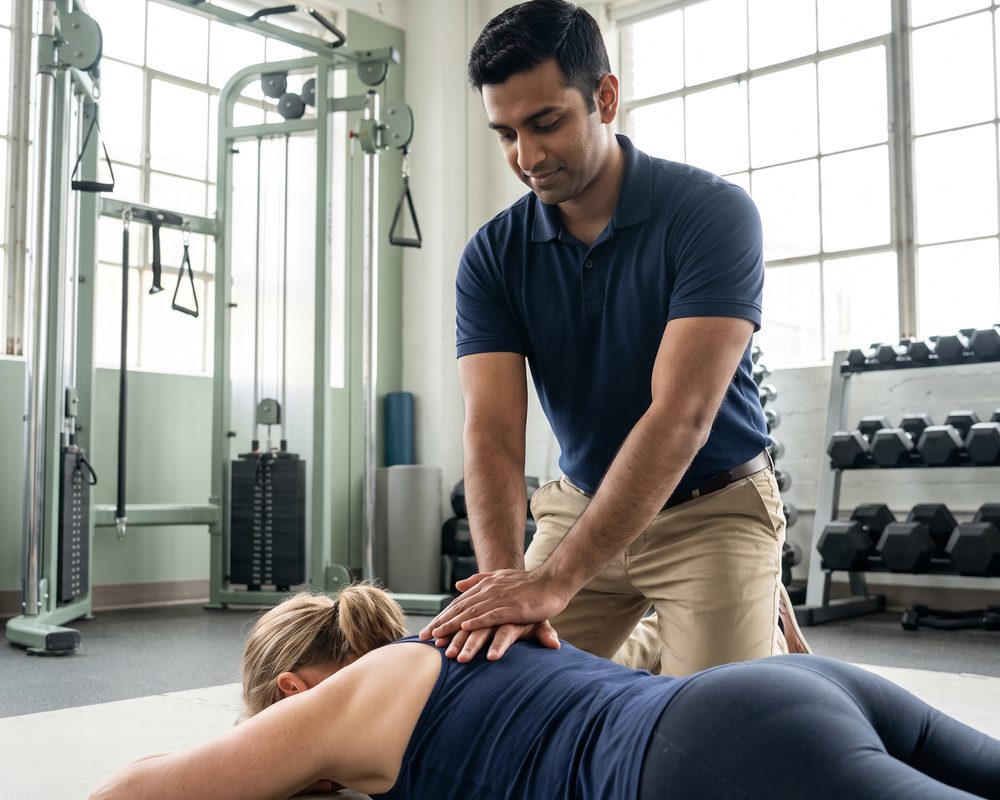
What is cupping therapy?
Cupping uses silicone or plastic cups to create gentle suction against the skin, lifting the skin, fascia, and superficial muscle away from the tissue underneath, the opposite direction of pressure from a typical massage. That decompression can increase local blood flow, ease guarded muscle, and help mobilize fascia that’s stuck to the layers around it.
The cups can be left stationary over a specific restriction or moved slowly over oiled skin, depending on what your evaluation found. Either way, cupping answers to the same plan as everything else here: a cause-first evaluation and the four named phases, Pain, Prime, Perform, and Prevent. It tends to earn its place in Pain and Prime, easing the guarding that’s blocking mobility work, or in Perform, supporting recovery between harder training sessions.
Every session is performed by a Doctor of Physical Therapy, as one tool inside your broader plan, not a stand-alone relaxation appointment.
Calm it down.
Hands-on treatment begins at the first visit. You leave understanding what’s actually going on, and you feel a difference early.
Restore what’s stuck.
Targeted mobility work for the joints and tissue actually holding you back, dosed to your body, not a printed sheet.
Build strength you trust.
Progressive load against standards you have to clear before moving on. Confidence, here, is a training effect.
Make it stay fixed.
Testing before you’re cleared, then a keep-it-gone program sized to your real week. Then we graduate you.
What conditions does cupping treat?
Cupping tends to support conditions where guarded, restricted, or overworked soft tissue is part of what’s keeping mobility work from progressing. A sample of what it commonly supports:
Neck pain & headaches ⟶
The corded upper traps that guard behind the headache that camps behind one eye.
02Low back pain ⟶
The paraspinal guarding around an irritated disc or SI joint that a morning stretch alone won’t touch.
03Hip pain ⟶
Hip flexor and glute tightness that guards an irritated joint from moving freely.
Cupping isn’t appropriate for every problem, and it’s not a first appointment on its own. Your evaluation determines whether it belongs in your plan, alongside the movement and strength work that addresses the actual cause.
What does a cupping session look like?
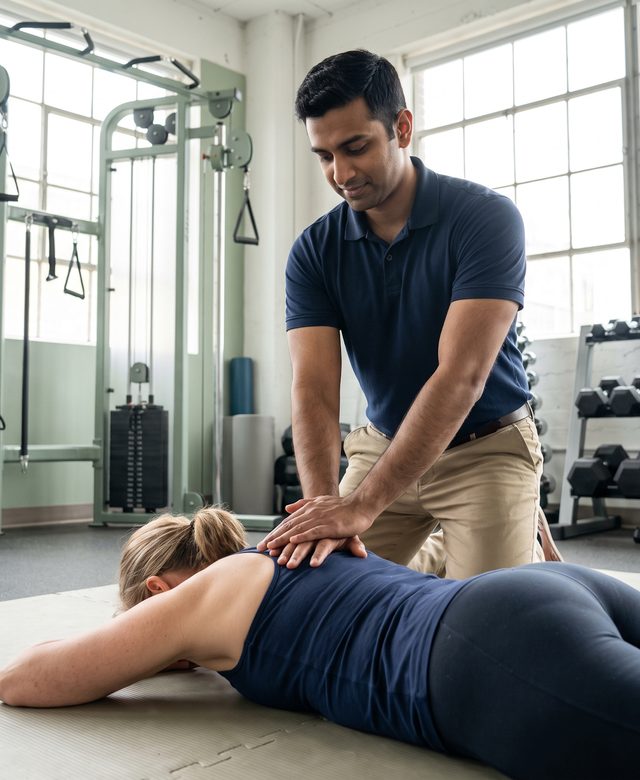
Cupping is scheduled as part of a regular visit. Dr. Dennis places the cups over the tissue your evaluation flagged, either holding them stationary or gliding them slowly over oiled skin, and adjusts the suction to what you can tolerate. Most patients feel an unusual pulling sensation rather than sharp pain, and it’s common to see temporary circular marks afterward as the tissue responds.
The same visit typically continues into mobility or strength work while the tissue is loosened, because cupping is meant to open a window for that work, not replace it.
Who this is for, and who it isn’t.
Cupping tends to fit patients already in a plan whose evaluation turned up guarded or restricted soft tissue slowing progress, or who need extra soft-tissue support around a demanding training block. It’s an addition to an existing plan, not a substitute for the evaluation that hasn’t happened yet.
If you’re comfortable with the idea of temporary marks in exchange for the tissue actually loosening, and you’d rather have it coordinated with your doctor than guessed at on your own, mention it at your evaluation.
It’s not appropriate over acute injuries, fractures, active infection or open wounds, or for patients with certain bleeding disorders or blood-thinning medications, which your evaluation screens for before any cups are used.
Good fit
- Already in a physical therapy plan with guarded or restricted soft tissue
- Need extra soft-tissue support around training or a hard week
- Comfortable with temporary marks where the cups sat
- Want the work coordinated with your doctor’s evaluation
Not the right fit
- Acute injuries, fractures, or active infection
- Certain bleeding disorders or blood-thinning medications (screened at evaluation)
- Pain that hasn’t been evaluated yet
Physical Therapy ⟶
The evaluation and plan it’s built to serve.
02Dry Needling ⟶
Two different ways at the same guarded tissue, often used in the same plan.
It’s a tool inside the plan, never a stand-alone service.
“My upper back was constantly tight from training. Cupping paired with the rest of my sessions is the first thing that’s actually kept it loose between visits.”Demo quote, pending client swap
Questions, answered plainly.
Often, yes. The suction can leave circular discoloration where the cup sat, which looks more dramatic than it feels and typically fades within a few days to a week. It isn’t an injury, it’s just the local response to the suction, similar to how a hard massage can leave a mark.
Most patients describe the suction sensation as unusual before it’s uncomfortable, a pulling feeling rather than sharp pain. The intensity is adjusted to what you can tolerate. Some soreness in the treated area afterward is common and usually settles within a day or two.
Here, no. Cupping is scheduled inside an existing physical therapy plan, following a cause-first evaluation that confirms which tissue actually needs the work. It’s paired with the manual therapy and exercise doing the rest of the job, not booked as a stand-alone relaxation session.
It depends on what your evaluation found and how your plan is progressing. Some patients have it scheduled once to calm a specific guarded area; others use it periodically around a heavy training week. Your Doctor of Physical Therapy will tell you whether and how often it fits your plan.
Start with the evaluation that decides where the suction goes.
Put it in writing.
Five short questions. A real person calls you back, usually within two business hours, with times that fit your week.
The people who end up filling this out are rarely in the worst pain of their life. They’re just done working around it, done picking the errand that doesn’t require the stairs. If that’s the stage you’re at, this is the part where you stop researching and start.
Consider it filed.
A real person will call you back, usually within two business hours, with appointment times that fit your week. Keep your phone nearby.
Can’t wait? Call (801) 508-4784 ⟶Two clinics in Tooele. Both easy to park.
Two locations in town, both with parking by the door. Same team, same one-on-one care. Come see either one before you commit, if you like.
Two clinics · Reach Physical Therapy and Performance
Lodestone Way ⟶West 60 South ⟶Directions open in Google Maps